The Power of Afternoon Batch Cooking
Spending one focused afternoon in the kitchen can set you up with ready-made dinners for weeks. Freezer meal prep isn't just about convenience — it's about having real, home-cooked food available when time is short and energy is low. The key is choosing recipes that freeze beautifully and can be prepared using overlapping techniques and ingredients.
The most successful freezer meal sessions focus on dishes that actually improve with time. Braises, stews, and saucy dishes often taste better after their flavors have had time to meld in the freezer. Casseroles hold their texture well, and soups reheat perfectly. These aren't compromise meals — they're strategic ones.
Choosing Your Freezer Meal Lineup
The best freezer meals share a few characteristics: they contain enough liquid or sauce to prevent drying out, they don't rely on ingredients that become mushy when frozen (like fresh herbs or delicate vegetables), and they reheat evenly. Think beyond basic casseroles to include hearty soups, braised meats, and grain-based dishes that freeze beautifully.
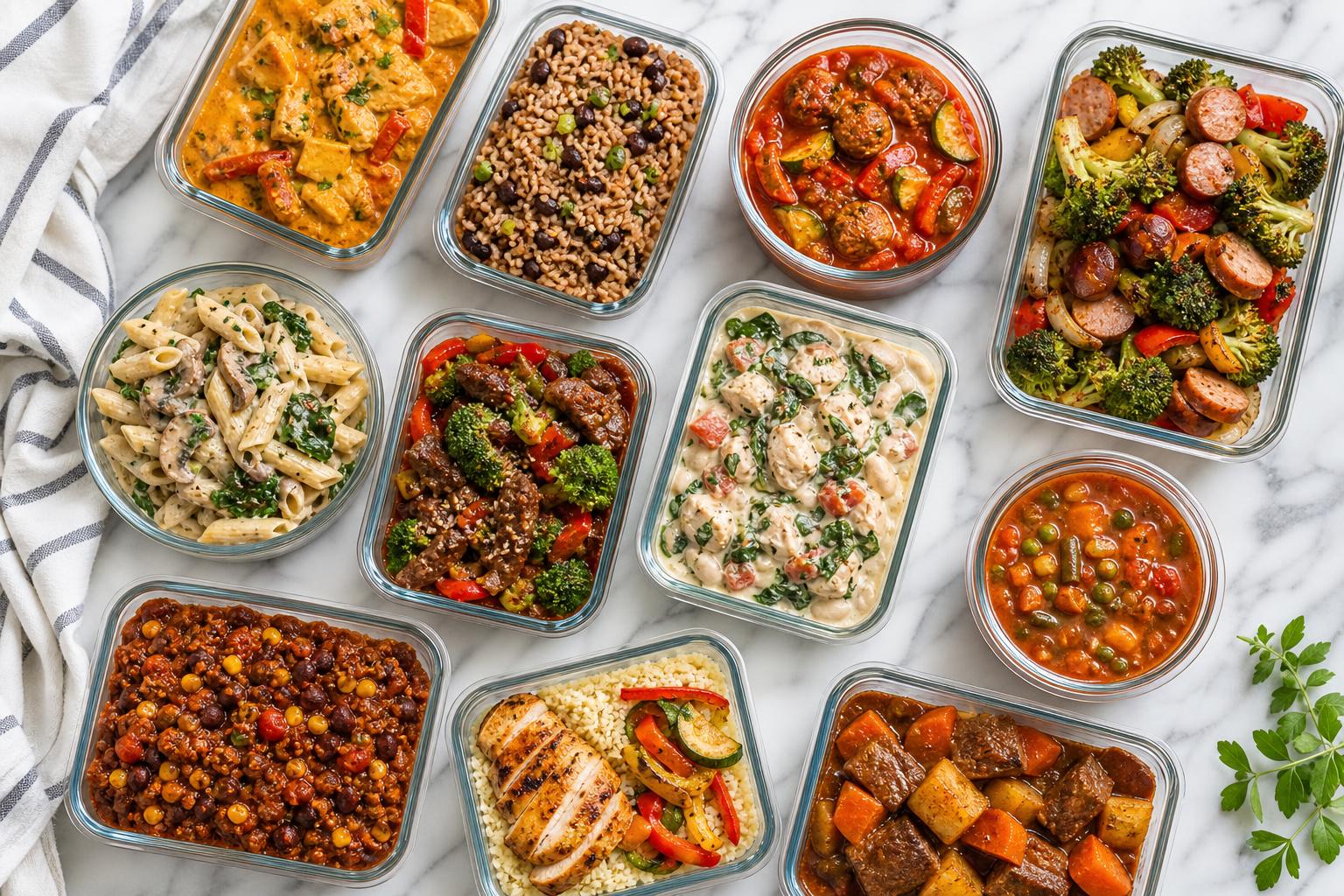
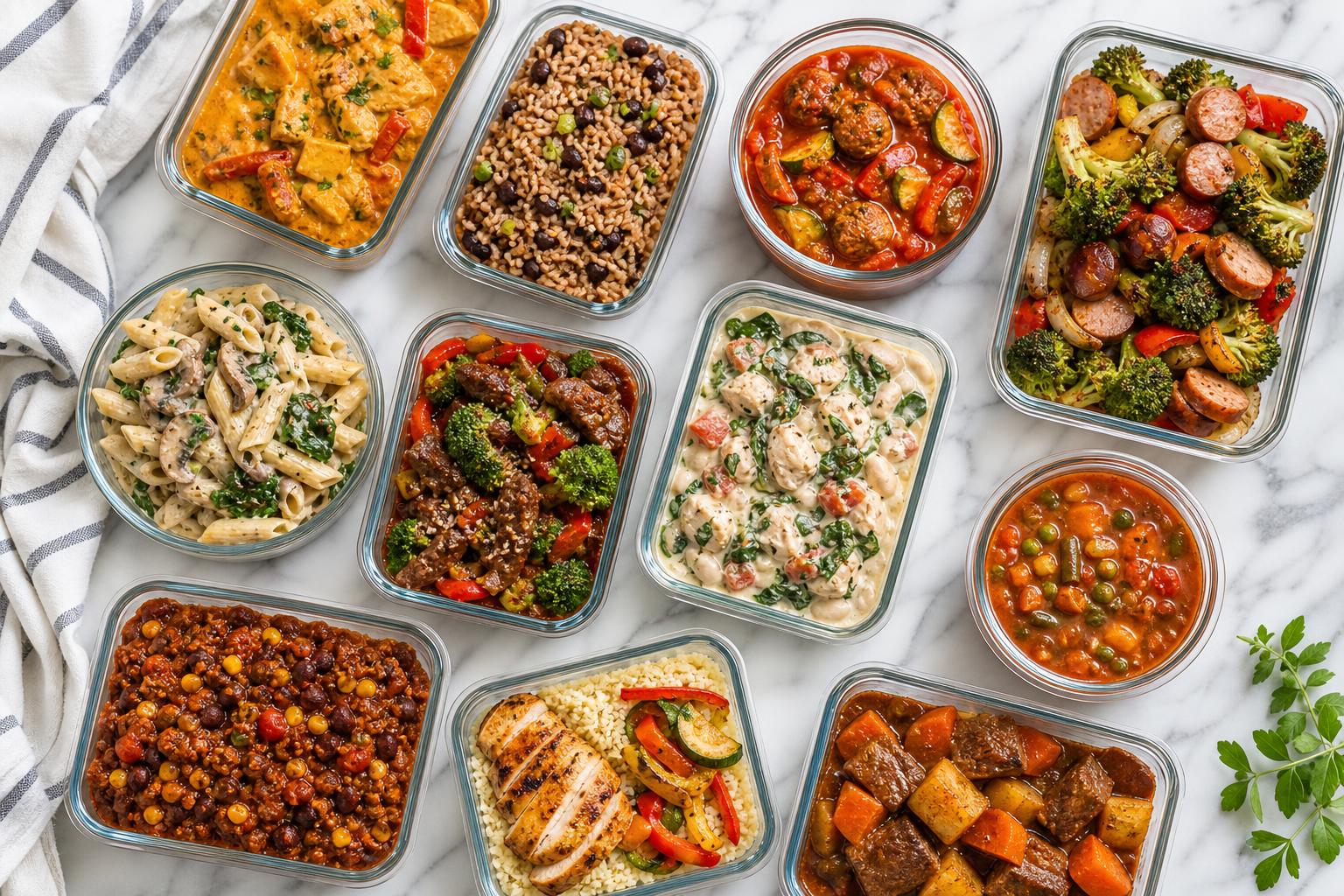
Start with a beef and vegetable stew — brown the meat in batches, add root vegetables and broth, then simmer until tender. While that's cooking, prepare a large batch of chicken curry using coconut milk as the base. The richness protects the chicken from freezer burn, and the complex spices actually develop more depth over time.
Vegetarian chili works particularly well for batch cooking because beans and tomatoes freeze excellently. Make a double batch using a variety of beans, diced tomatoes, and warming spices. Similarly, a lentil and vegetable soup provides protein and fiber while freezing beautifully — lentils maintain their texture better than most legumes.
For something more substantial, stuffed bell peppers filled with ground meat, rice, and vegetables freeze individually and reheat perfectly. Meatballs in marinara sauce offer versatility — serve over pasta, in sandwiches, or with polenta. The sauce keeps the meatballs moist during freezing and reheating.
Enchiladas are ideal for freezer prep because the sauce prevents the tortillas from drying out. Assemble them in disposable aluminum pans for easy storage and reheating. A hearty minestrone soup packed with vegetables and beans provides a lighter option that still feels substantial.
Round out your selection with shepherd's pie — the mashed potato topping acts as a protective layer for the meat and vegetable filling underneath. Finally, chicken and rice casserole combines protein, starch, and vegetables in one dish that reheats evenly and feeds a crowd.
Maximizing Your Prep Time
Efficient batch cooking relies on smart sequencing and multitasking. Start with dishes that need the longest cooking time, like stews and braises. While those simmer, prep vegetables for quicker-cooking meals. Use your oven, stovetop, and slow cooker simultaneously to maximize output.
Ingredient overlap makes shopping and prep more efficient. If you're making both beef stew and shepherd's pie, buy extra onions and carrots to use in both. Ground meat can go into meatballs, stuffed peppers, and chili. Rice works in stuffed peppers, casseroles, and as a side for curry.
Cook grains and pasta slightly underdone since they'll continue cooking when reheated. This prevents mushy textures later. For dishes with dairy, be selective — cream-based sauces can separate when frozen, but cheese-topped casseroles generally freeze well.
Storage and Reheating Strategy
Proper packaging prevents freezer burn and makes reheating more successful. Cool completely before freezing — hot food raises the temperature of your entire freezer. Use freezer-safe containers or heavy-duty freezer bags, removing as much air as possible. Flat storage in bags saves space and allows food to freeze and thaw more quickly.
Label everything with contents and date. Even obvious containers become mysterious after a few weeks in the freezer. Most prepared freezer meals maintain quality for three to four months, though they remain safe longer.
For reheating, thaw overnight in the refrigerator when possible. Soups and stews can go straight from freezer to stovetop over low heat with a splash of added liquid. Casseroles reheat best in the oven, covered with foil to prevent drying. Individual portions can go in the microwave, but add a tablespoon of water and cover to create steam.
Making It Sustainable
The most successful meal preppers don't try to do everything at once. Choose four to six recipes for your first session rather than attempting all ten. Focus on dishes your household actually enjoys — the best freezer meal is one that gets eaten enthusiastically.
Consider your reheating equipment and schedule. If you rarely use your oven on weeknights, prioritize stovetop-friendly soups and stews. If lunch prep is your bigger challenge, focus on portion-sized containers rather than family-style casseroles.
Variety prevents fatigue — include different proteins, cooking methods, and flavor profiles in your batch. Having options makes it easier to match meals to your mood and schedule throughout the weeks ahead.
If meal planning around your preferences, schedule, and dietary needs sounds appealing, that's exactly what MealAI does. The app helps you organize batch cooking sessions and plan meals that work with your lifestyle. It's free at usemealai.com.